
Vegan Jjajang Tteokbokki (Non-Spicy)
Vegan Jjajang Tteokbokki is what you make when you want comfort food that feels cozy, nostalgic, and just a little special. It has all the chewy, satisfying goodness of Korean rice cakes, but instead of heat, you get a rich, savory black bean sauce that’s mild and deeply flavorful. This version is perfect if spicy food isn’t your thing—or if you just want something soothing after a long day. It’s filling without being heavy, bold without being fiery, and surprisingly easy to make at home. Basically, it’s proof that non-spicy food can still be exciting.
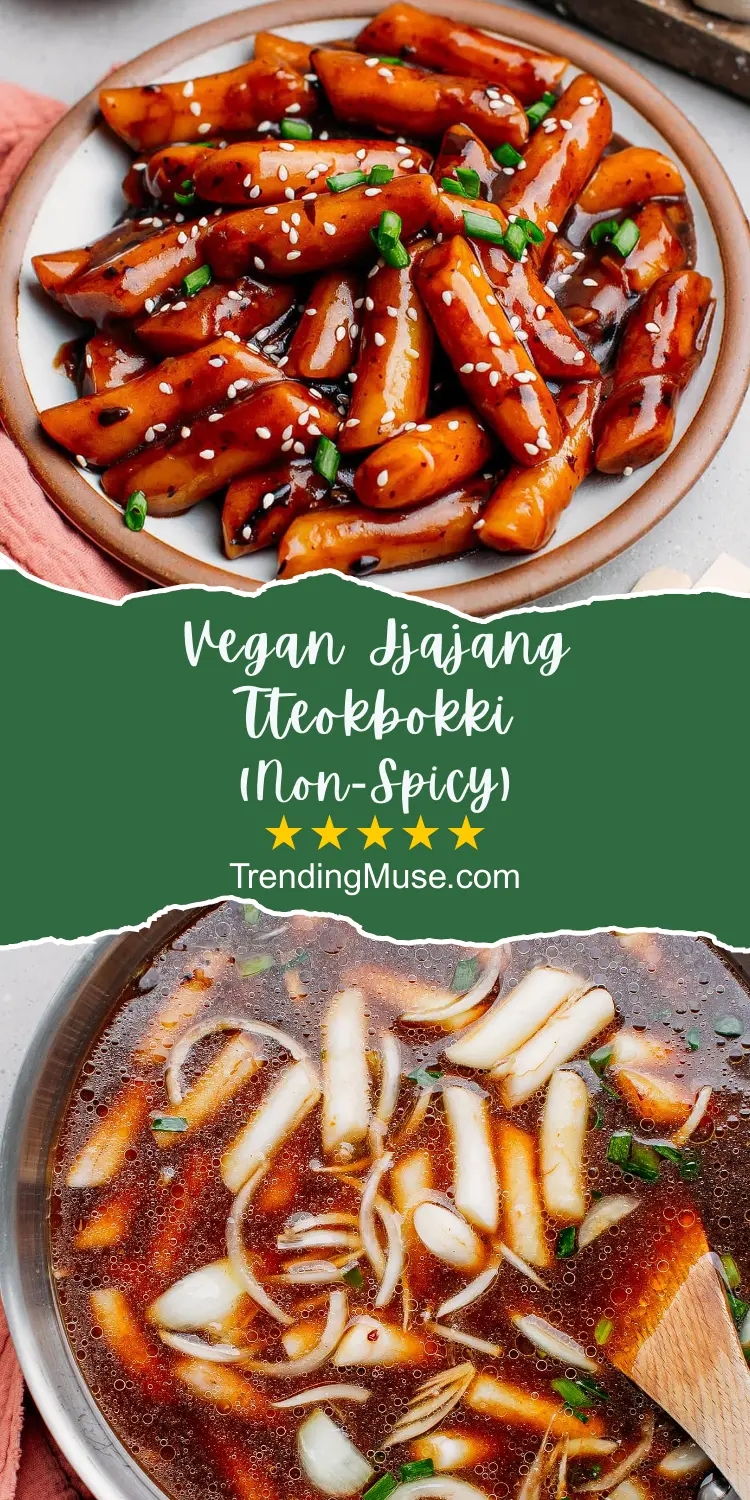
What Makes This Vegan Jjajang Tteokbokki (Non-Spicy) Special
What makes this dish stand out is the black bean sauce (jjajang), which is rich, savory, and slightly sweet. Unlike traditional spicy tteokbokki, this version focuses on depth of flavor rather than heat. The chewy rice cakes soak up the sauce beautifully, while vegetables add texture and balance. It’s also completely plant-based without feeling like a “substitute” version of anything. Comforting, approachable, and very crave-worthy.
Ingredients
- 400 g Korean rice cakes (tteok), fresh or soaked if frozen
- 2 tablespoons vegetable oil
- 1 medium onion, diced
- 2 cloves garlic, minced
- 1 small zucchini, diced
- ½ cup cabbage, chopped
- ½ cup mushrooms, sliced
- 2 tablespoons Korean black bean paste (chunjang)
- 1 teaspoon sugar
- 1½ cups vegetable broth or water
- 1 teaspoon soy sauce
- 1 teaspoon cornstarch + 2 tablespoons water (slurry)
- Sesame oil, optional, for finishing
Instructions
- If using frozen rice cakes, soak them in warm water for 10 minutes to soften, then drain well.
- Heat vegetable oil in a pan over medium heat. Add onion and cook until soft and lightly golden.
- Stir in garlic and cook until fragrant, then add zucchini, cabbage, and mushrooms. Cook for 3–4 minutes until slightly tender.
- Push vegetables to one side and add the black bean paste to the pan. Stir-fry it briefly in the oil to deepen the flavor.
- Add sugar, soy sauce, and vegetable broth, stirring everything together. Bring to a gentle simmer.
- Add the rice cakes and cook for 5–7 minutes until tender and coated in sauce.
- Stir in the cornstarch slurry and cook until the sauce thickens.
- Finish with a small drizzle of sesame oil if desired, then serve warm.
Storage Tips
Store leftover Vegan Jjajang Tteokbokki in an airtight container in the refrigerator for up to 2 days. Rice cakes firm up when cold, so reheat gently with a splash of water or broth. Stir while reheating to loosen the sauce. This dish is best enjoyed fresh but still very satisfying the next day.
Health Benefits
This dish offers a nice balance of carbohydrates for energy and vegetables for nutrients. The vegetables provide fiber, vitamins, and antioxidants, while the black bean paste adds protein and umami flavor. Because it’s non-spicy and oil-controlled, it’s easier on digestion for many people. It’s comforting food that can still fit into a balanced, plant-based diet.
Common Mistakes to Avoid
One common mistake is skipping the stir-fry step for the black bean paste, which can leave the sauce tasting flat or bitter. Another issue is not soaking frozen rice cakes long enough, leading to uneven texture. Adding too much water can thin the sauce too much—go slow and adjust as needed. Finally, don’t rush the thickening step; let the sauce come together properly.
Alternatives and Variations
You can add diced potatoes or carrots for a heartier version. Swap rice cakes for udon noodles if you want a softer texture. For extra protein, add pan-fried tofu cubes. If you want a slightly sweeter sauce, add a bit more sugar. This recipe is flexible and easy to adapt.
Frequently Asked Questions
Is this dish completely non-spicy?
Yes, it has no chili paste or chili powder at all.
What does jjajang sauce taste like?
It’s savory, slightly sweet, and deeply umami-rich.
Can I make this gluten-free?
Use gluten-free black bean paste and tamari instead of soy sauce.
Can I prepare this ahead of time?
It’s best fresh, but you can prep the vegetables in advance.
Are Korean rice cakes chewy?
Yes, they’re pleasantly chewy and very satisfying.
Final Thoughts
Vegan Jjajang Tteokbokki (Non-Spicy) is a wonderful reminder that comfort food doesn’t need heat to have personality. It’s rich, cozy, and packed with flavor, making it perfect for quiet nights or sharing with friends who prefer mild dishes. If you’re looking for a new way to enjoy Korean-inspired food at home, this recipe is a great place to start. Give it a try and enjoy a bowl of warmth that truly hits the spot.


